How Many Days Should You Rest After Getting a Dental Implant
Dr. Syed Rayyan
Dr. Syed Rayyan is a medical professional and health writer focused on preventive care patient education and evidence based medical insights.
Dental Health Expert
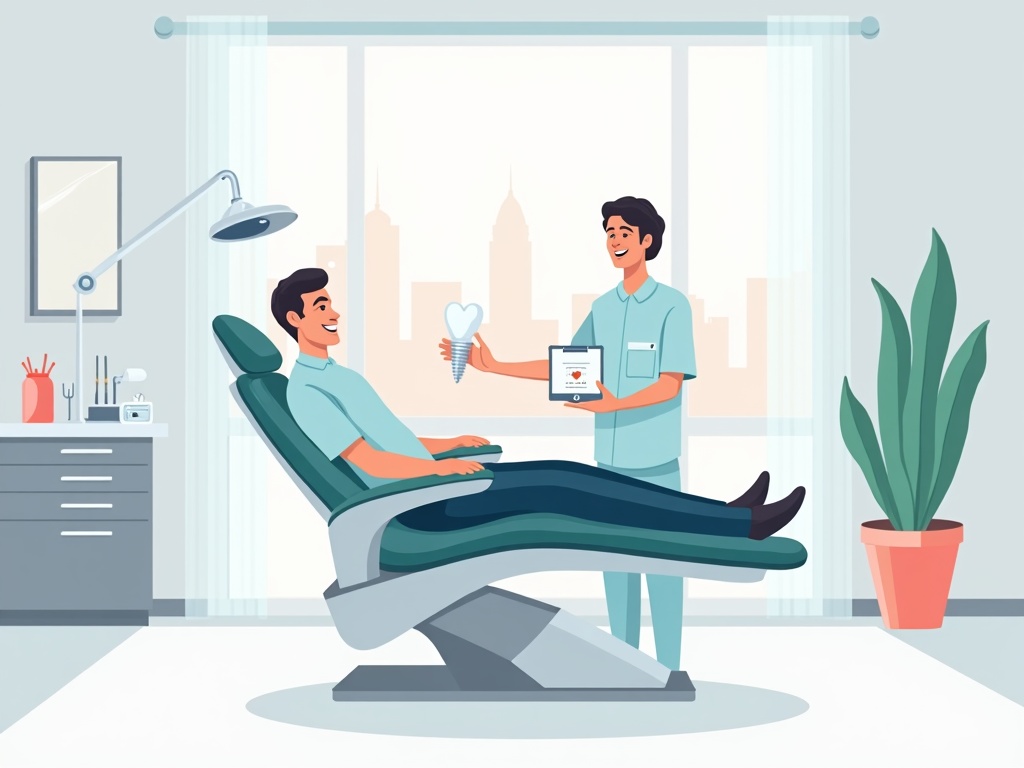
Dental implants are now the most requested permanent tooth replacement procedure at DHA-licensed clinics across Dubai, with thousands placed every year. Yet the post-operative rest period remains the step most patients underestimate. This article is for general guidance only and does not replace the personalised advice of your treating dentist.
You want a straight answer, not a vague "rest for a few days" and hope for the best. Whether your surgery is tomorrow or already done, you need to know exactly how many days off work you need, what your body is doing during that time, and which signs mean healing is on track versus off course.
This guide covers a day-by-day first-week timeline, the foods and activities to avoid, UAE-specific considerations including Ramadan fasting and shisha use, what the longer osseointegration phase looks like, and how to choose the right DHA-licensed clinic so your recovery is as smooth as possible.
How Many Days Should You Rest After a Dental Implant? The Direct Answer
Most patients need 2 to 3 days of physical rest after implant surgery, with the first 72 hours being the most critical window. During this period, the surgical site is most vulnerable to disruption, and the foundation for successful osseointegration is being established.
The distinction that matters: resting from work and physical activity is a short-term requirement of 2 to 7 days depending on what your job involves. The broader healing period, during which care protocols must continue and hard foods must be avoided, runs from 3 to 6 months while the implant fuses to your jawbone. Same-day implant procedures may carry a slightly shorter acute rest window, but the longer integration timeline remains the same.
Rest Days by Activity Type: A Quick Reference for UAE Patients
| Activity | Recommended Rest Period |
|---|---|
| Desk-based office work | Return after 2 to 3 days |
| Manual or outdoor labour | 5 to 7 days minimum |
| Gym and exercise | 10 to 14 days |
| Driving | 24 to 48 hours after sedation clears |
| Flying | Minimum 48 to 72 hours — consult your dentist |
Dubai's heat and outdoor environment add a practical layer to recovery planning. Swelling is harder to manage when you are exposed to high temperatures, so patients working outdoors or commuting long distances in summer should factor climate into their rest decisions.
What Happens to Your Body in the First 72 Hours After Implant Surgery
The moment the titanium post is placed into your jawbone, your body begins a precise biological sequence. A blood clot forms at the surgical site within the first hour. This clot is not an inconvenience — it is the scaffolding for bone tissue repair and must not be disturbed.
Over the following 24 to 48 hours, your immune system triggers an inflammation response. Swelling, warmth around the site, and tenderness are all part of this process, not signs that something has gone wrong. Bone tissue begins stabilising around the implant post during this window, which is exactly why pressure, excessive movement, and contamination carry the highest risk of implant failure at this stage.
Local anaesthetic wears off within a few hours of surgery. Have your prescribed pain relief ready before the numbness fades. DHA-licensed implant dentists in Dubai are required to provide written post-operative instructions at discharge — if you did not receive a written protocol, contact the clinic and request one.
- Hours 1 to 4: numbness from local anaesthetic, minimal discomfort, mild bleeding at the site
- Hours 4 to 8: anaesthetic wears off, prescribed medication should be taken as directed, rest with head slightly elevated
- Hours 8 to 24: swelling begins to develop, apply ice packs in 20-minute intervals, soft foods only
- Hours 24 to 48: swelling peaks, avoid all hot food and drink, begin gentle salt-water rinses only if your dentist has instructed this
- Hours 48 to 72: swelling begins to reduce, bruising may appear on cheek or jaw, energy gradually returns
Normal Symptoms vs. Warning Signs in the First Three Days
- Normal: Swelling peaking at 48 hours
- Normal: Mild bleeding for the first few hours
- Normal: Bruising on the cheek or jaw
- Normal: Sensitivity and tenderness around the site
- Warning — call your clinic same day: Heavy, uncontrolled bleeding that does not slow
- Warning — call your clinic same day: Fever above 38.5°C
- Warning — call your clinic same day: Severe throbbing pain not controlled by prescribed medication
- Warning — call your clinic same day: The implant feels loose or is shifting position
Save your clinic's emergency contact number in your phone before the surgery date. Many DHA-licensed dental clinics in Dubai operate a 24-hour post-surgery helpline specifically for implant patients.
Day-by-Day Recovery Timeline: Week One After Your Dental Implant in Dubai
- Day 1: Rest at home completely. Apply ice packs for 20 minutes on, 20 minutes off. Eat soft foods only — yoghurt, mashed potato, soup at room temperature. Do not rinse forcefully or spit. Keep your head elevated when resting.
- Day 2: Swelling is likely at its peak today. Continue the soft diet and avoid hot food or drinks. Begin gentle warm salt-water rinses if your dentist has cleared this step. Bruising on the cheek or jaw may appear for the first time.
- Day 3: Swelling typically begins to reduce. Most patients with desk-based jobs can consider returning to light office work, though fatigue is still common. Do not rush this decision — Dubai commute stress and long working hours add physical strain that matters during recovery.
- Days 4 to 5: Significant improvement for most patients. The site feels less tender, energy levels rise. Continue avoiding hard, crunchy, or chewy foods on the implant side. No gym or strenuous activity yet.
- Days 6 to 7: Most Dubai implant protocols schedule a follow-up visit at this point. Your dentist checks the healing site, removes any non-dissolving sutures if present, and confirms the trajectory is on track. Do not skip this appointment even if you feel completely fine.
Foods, Activities, and Habits to Avoid During Dental Implant Recovery
Foods to avoid:
- Hard bread, crusty rolls, and crackers
- Nuts, seeds, and raw vegetables
- Extremely hot food and drinks
- Carbonated drinks during the first 48 hours
- Sticky foods that can dislodge the clot or irritate the site
Activities to avoid:
- Gym workouts and weight training for at least 10 to 14 days
- Swimming pools — chlorinated water carries infection risk for open surgical sites
- Bending forward and heavy lifting, which increase blood pressure at the implant site
Habits with UAE-specific relevance:
- Shisha and cigarette smoking significantly increase implant failure rates. Both must be stopped for a minimum of two weeks before and after surgery. DHA dental guidelines identify smoking as a primary risk factor for implant complications.
- Alcohol use should be avoided entirely during recovery — it interferes with tissue healing and interacts dangerously with prescribed antibiotics.
Ramadan and Dental Implant Recovery: What UAE Patients Should Know
Patients who observe Ramadan fasting should speak with their DHA-licensed dentist before scheduling implant surgery around the fasting period. Prolonged fasting affects hydration levels and makes medication scheduling more complex, both of which directly influence how well the surgical site heals.
Many dental clinics in Dubai offer specific Ramadan scheduling guidance and can help you choose a surgery date that minimises conflict with fasting obligations. If your surgery falls during Ramadan, plan your Iftar and Suhoor meals in advance with soft, nutrient-dense foods that support tissue recovery without putting pressure on the implant site. Dates, lentil soups, and yoghurt-based dishes are practical choices that align with both recovery requirements and traditional Ramadan eating patterns.
Do not attempt to self-manage this timing without clinical input. The interaction between fasting, hydration, and post-surgical healing is something your dentist needs to assess based on your specific health profile.
Dental Implant Costs in Dubai and What Your Recovery Package Should Include
A single dental implant in Dubai in 2026 typically costs between AED 3,500 and AED 8,000. The range reflects differences in clinic location, implant brand, and whether bone grafting is needed prior to implant placement. Clinics in DIFC, Downtown Dubai, and Jumeirah tend to sit at the higher end of that range.
A complete implant package should cover more than just the post. Before booking, confirm the following are included or clearly priced separately:
- The implant post, abutment, and permanent crown
- Pre-surgical CBCT scan for treatment planning
- Post-operative care visits including the week-one follow-up
- Written discharge instructions with emergency contact details
- Clarity on whether emergency consultations within the first week carry an additional fee
UAE health insurance plans under schemes such as Daman, AXA Gulf, and Oman Insurance vary significantly in how they handle implant costs. Most standard plans classify implants as cosmetic and exclude them. Enhanced plans may offer partial coverage. Verify your policy details with your insurer before your surgery date, not after. You can browse and compare dental implant clinics in Dubai through AppointPanda to check service inclusions side by side.
How to Choose a DHA-Licensed Dental Implant Clinic in Dubai for a Safe Recovery
Every dental clinic operating in Dubai must hold a valid DHA facility license, and the dentist placing your implant must hold a current DHA practitioner license. Both are verifiable through the Dubai Health Authority website before you book. Do not assume — verify.
- Check the DHA license status of both the clinic and the treating dentist directly on the DHA website.
- Look for implantology or oral surgery specialist qualifications, not just general dentistry credentials.
- Ask how many implants the dentist places per month — experience volume matters for complex procedures.
- Confirm the clinic uses internationally certified implant systems such as Nobel Biocare, Straumann, or equivalent brands with long-term clinical data behind them.
- Verify that a CBCT scan is included in the treatment planning process, not added as an optional extra.
- Ask directly about the clinic's implant failure rate and what their policy is if an implant fails or does not integrate successfully.
- Assess the quality of post-operative care protocols — a clinic that provides clear written discharge instructions and a dedicated aftercare contact is signalling higher clinical standards than one that sends you home verbally.
If you are based outside Dubai, MOHAP-licensed clinics across other emirates and DoH-licensed clinics in Abu Dhabi follow equivalent licensing frameworks. The same verification approach applies regardless of emirate.
The Longer Healing Phase: What to Expect from Month One to Month Six
After the first week, most patients return to their normal daily routines. The implant, however, is still in the middle of a months-long process of fusing with the surrounding jawbone. Osseointegration continues for 3 to 6 months, and treating this phase as optional afterthought care is one of the most common reasons implants fail after an otherwise successful surgery.
Throughout this period, avoid chewing hard foods directly on the implant side. Maintain thorough oral hygiene around the site using techniques your dentist has shown you — standard brushing is not always sufficient near the implant margin. Attend every scheduled follow-up visit, even when the site feels completely normal. Report any new pain, sensitivity, or movement immediately rather than waiting for the next routine appointment.
If a temporary crown was placed at the time of surgery or shortly after, it will feel different from your natural teeth. This is expected. The permanent crown is typically fitted once your dentist confirms successful osseointegration, usually at the 3-to-6-month mark through a follow-up scan or clinical assessment.
Some newer implant systems now available at specialist clinics in Dubai support faster loading protocols, meaning the permanent crown may be placed earlier than the traditional timeline. This is determined by bone density data from your initial CBCT scan and is a decision made by your specialist, not a standard option available to all patients. This article provides general guidance only — individual recovery timelines vary based on overall health, bone quality, and clinical factors that only your treating dentist can assess.
Frequently Asked Questions About Dental Implant Recovery in the UAE
Can I go to work the day after getting a dental implant in Dubai?
Most patients with desk-based jobs can return to work after 2 to 3 days. Physical or outdoor roles in Dubai's climate require more time — typically 5 to 7 days — to avoid the compounding effects of sweating, physical strain, and elevated swelling risk in high temperatures.
How much does a dental implant cost in Dubai in 2026?
Single implants typically range from AED 3,500 to AED 8,000 depending on the clinic, implant brand, and whether bone grafting is required. A complete package including the crown, abutment, CBCT scan, and aftercare visits will vary by provider, so confirm exactly what is included before signing any treatment agreement.
Is it normal to have pain for a week after a dental implant?
Mild to moderate discomfort for 3 to 5 days is within the normal range. Pain that worsens after day 3, or pain that prescribed medication cannot adequately control, should be reported to your DHA-licensed dentist without delay — do not wait for a scheduled appointment if the pain is escalating.
Can I smoke shisha after getting a dental implant in the UAE?
No. Shisha and cigarette smoking both significantly increase the risk of implant failure and should be avoided for a minimum of two weeks before and after surgery. DHA dental guidelines identify smoking as a primary contributing factor to implant complications, and this applies equally to shisha despite common misconceptions about it being less harmful than cigarettes.
Does UAE health insurance cover dental implant recovery costs?
Most standard UAE health insurance plans classify implants as cosmetic procedures and do not cover them. Some enhanced plans under Daman, AXA Gulf, or Oman Insurance may offer partial coverage for specific elements of the treatment. Verify your policy details directly with your insurer before scheduling surgery so there are no surprises after the procedure is complete.
Conclusion
The core answer is straightforward: most patients need 2 to 3 days of rest after the acute surgical phase, with full osseointegration taking 3 to 6 months. Both phases are entirely manageable when you have a clear protocol and a clinical team that communicates well. This article provides general guidance only — your dentist's specific instructions for your case always take priority.
The single most important decision you make is choosing a DHA-licensed clinic with a structured post-operative care protocol. That choice determines not just how comfortable your recovery is, but how reliably your implant integrates over the months that follow.
AppointPanda.ae makes it straightforward to find verified, DHA-licensed dental implant clinics across Dubai, Abu Dhabi, and the wider UAE. Compare clinic services, check credentials, and book your appointment directly through the platform — so you can move forward with confidence rather than uncertainty.
Sources & References
- [1]Dubai Health Authority (DHA). Dental Health Guidelines. Available at: dha.gov.ae
- [2]World Health Organization (WHO). Oral Health. Available at: who.int
- [3]American Dental Association (ADA). Clinical Recommendations. Available at: ada.org
Last reviewed: March 2026. Content verified by licensed dental professionals.